
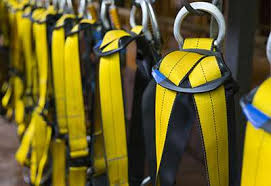
The **ACTI Fall Protection Equipment Qualified Inspector Training Program** is designed to equip individuals with the **knowledge and skills required to inspect and recertify fall protection equipment** in compliance with ** OH&S regulations, CSA Z259 standards, and industry best practices**. This program ensures that inspectors can assess the safety, integrity, and compliance of fall protection equipment used in various work environments.
Participants will learn how to **identify defects, conduct systematic inspections, document findings, and apply best practices for maintaining fall protection systems**. The course covers **inspection procedures, regulatory requirements, manufacturer specifications, and proper documentation techniques**.
📌 Key Learning Modules:
- Legislation & Compliance: Understanding OH&S regulations, CSA Z259 standards, and employer responsibilities for fall protection inspections.
- Types of Inspections: Pre-use, periodic, and annual inspections for harnesses, lanyards, self-retracting lifelines (SRLs), anchorage systems, and confined space rescue equipment.
- Component Inspections: Evaluating fall protection components such as harnesses, connectors, lifelines, anchors, energy absorbers, and hardware for damage and wear.
- Inspection Procedures & Documentation: Following systematic inspection checklists, logging inspection findings, and ensuring compliance with manufacturer recommendations.
- Condemning & Removing Equipment: Identifying and managing defective equipment, proper disposal methods, and understanding recertification requirements.
- Emergency Response & Equipment Failures: Handling post-fall incidents, rescue planning, and ensuring continued worker safety.
✅ Upon Completion:
Upon successfully completing the **ACTI Fall Protection Equipment Qualified Inspector Training Program**, participants will be able to:
- ✅ **Understand and apply** OH&S and CSA Z259 regulations related to fall protection equipment inspections.
- ✅ **Conduct detailed inspections** on harnesses, lanyards, lifelines, SRLs, and anchorage systems.
- ✅ **Recognize and document deficiencies** that require equipment removal or repair.
- ✅ **Properly tag and recertify fall protection equipment** in accordance with industry standards.
- ✅ **Develop and maintain inspection records** to ensure regulatory compliance and workplace safety.
- ✅ **Pass a written knowledge assessment** (minimum 80%) and successfully complete the practical inspection evaluation.
Participants who meet all course requirements will receive an **ACTI Fall Protection Equipment Qualified Inspector Certification**, recognized across **Canada**, ensuring they are qualified to perform **thorough and compliant fall protection equipment inspections in industrial, construction, and maintenance environments**.
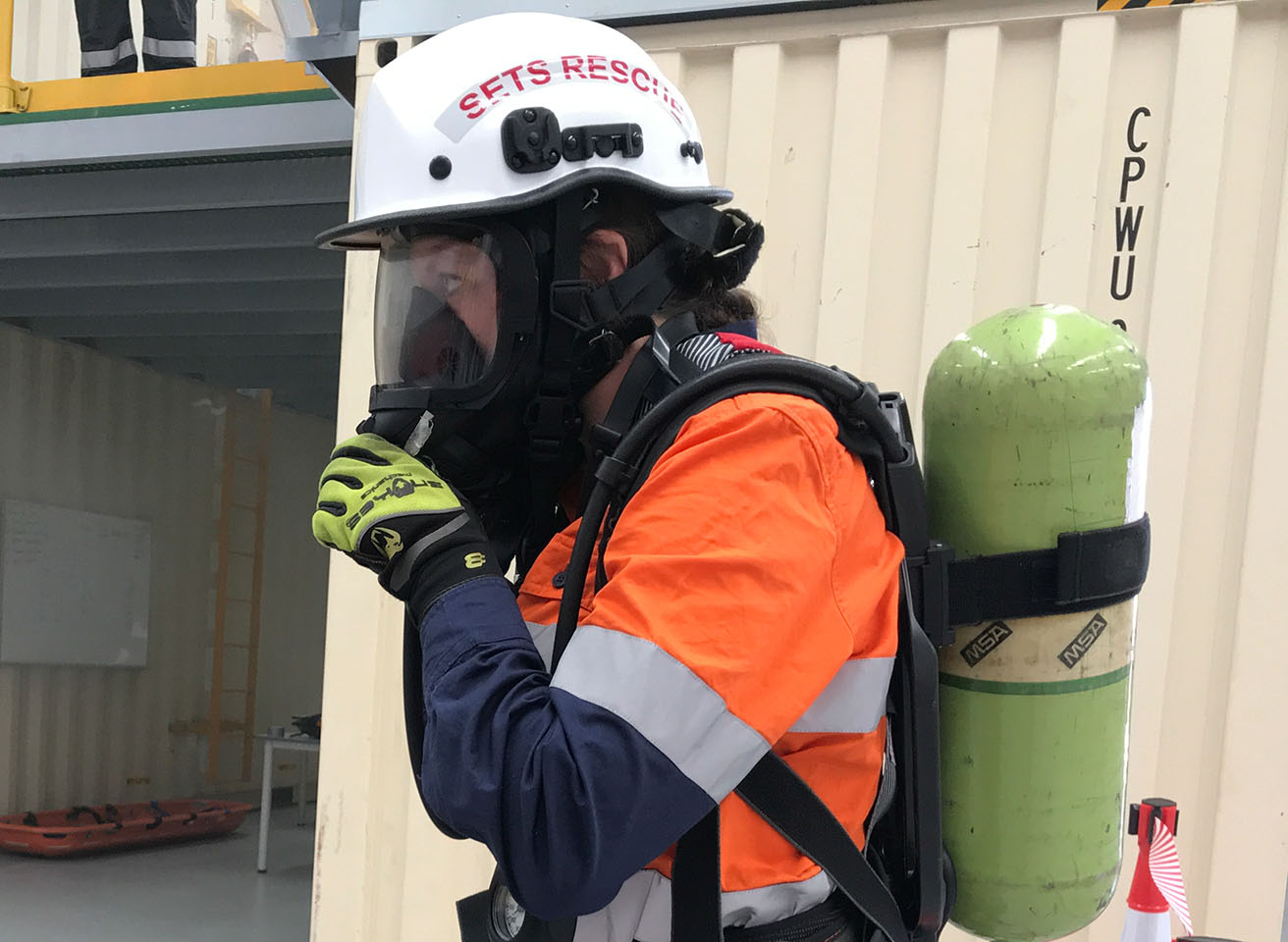
🔍 Click to Expand: Hazardous Atmosphere Detection and Control (HAT) Training Overview
The ACTI Hazardous Atmosphere Detection and Control (HAT) Training Program provides participants with essential knowledge and skills to **recognize, assess, and control hazardous atmospheres** in the workplace. This course aligns with **National and Provincial Occupational Health & Safety (OH&S) regulations** and **industry standards**, ensuring compliance and enhanced worker safety.
📌 Key Learning Modules:
- Regulatory Requirements & Standards: Understanding OH&S legislation, CSA standards, and employer/worker responsibilities.
- Types of Hazardous Atmospheres & Their Risks: Identifying toxic, flammable, oxygen-deficient, and other dangerous atmospheres.
- Hazard Assessments & Control Measures: Applying the Hierarchy of Controls to mitigate risks.
- Gas Detection & Atmospheric Testing: Learning to use, calibrate, and interpret gas detection equipment.
- Respiratory Protective Equipment (RPE): Selecting and using Self-Contained Breathing Apparatus (SCBA), Supplied Air Breathing Apparatus (SABA), and Air-Purifying Respirators (APR).
- Rescue Planning & Emergency Procedures: Developing and implementing rescue plans for hazardous atmosphere incidents.
- Incident Reviews & Case Studies: Examining real-world hazardous atmosphere incidents to reinforce key safety lessons.
✅ Upon Completion:
Upon successful completion of the **ACTI Hazardous Atmosphere Detection and Control (HAT) Training Program**, participants will be able to:
- ✅ Understand and apply National and Provincial OH&S regulations and CSA standards related to hazardous atmospheres.
- ✅ Recognize hazardous atmospheres and assess risks associated with oxygen deficiency, toxic gases, flammable vapors, and chemical exposure.
- ✅ Conduct atmospheric testing and monitor workplace conditions using gas detection equipment.
- ✅ Implement hazard control measures, including ventilation, purging, inerting, and administrative controls.
- ✅ Select and properly use respiratory protective equipment (RPE) for safe entry into hazardous environments.
- ✅ Develop and follow emergency response procedures, including evacuation and rescue plans.
- ✅ Pass a written knowledge assessment (minimum 80%) and successfully complete the practical skills evaluation.
Upon meeting all course requirements, participants will receive an **ACTI Hazardous Atmosphere Detection and Control (HAT) Certification**, recognized across **Canada**, ensuring they are qualified to safely work in **environments with hazardous atmospheric conditions**.
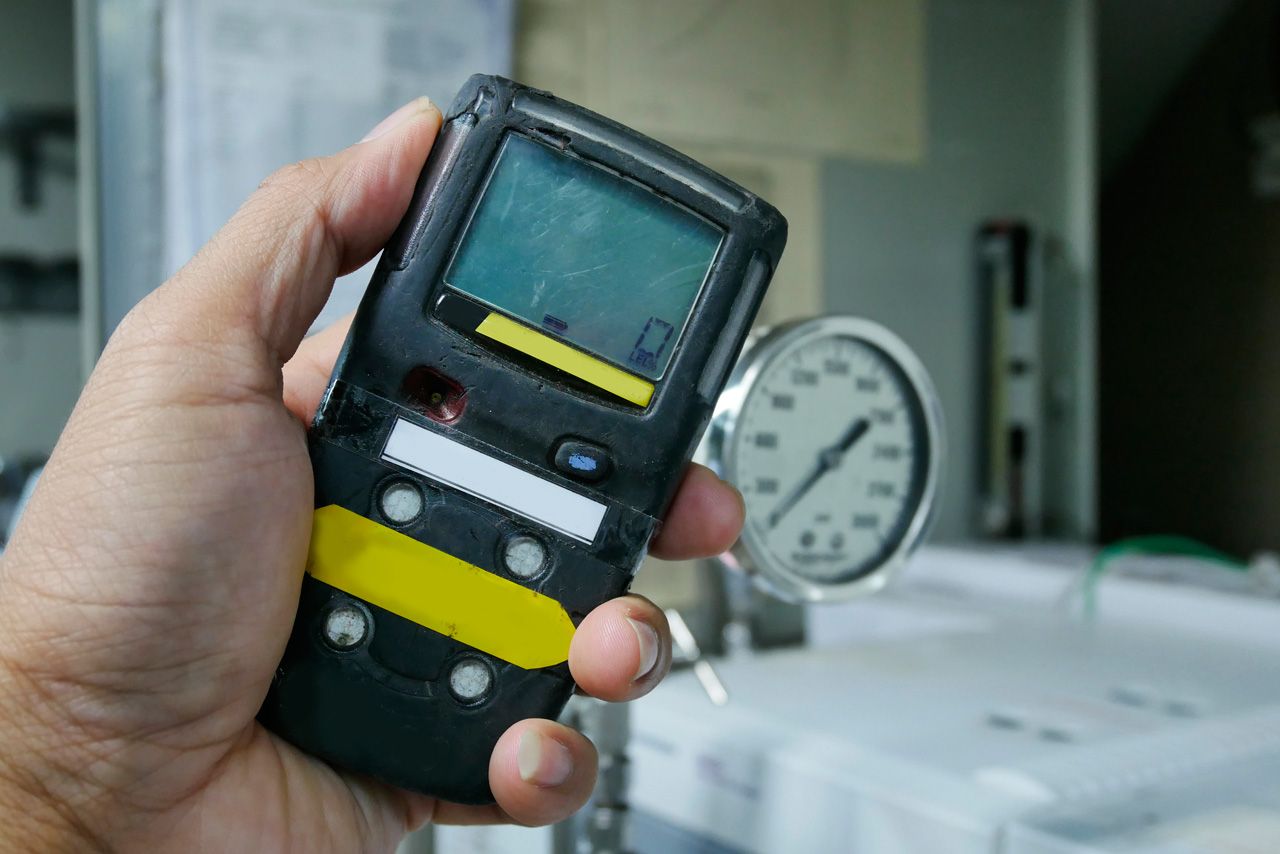
🔍 Click to Expand: Detection and Control of Flammable Substances Training Overview
The **Detection and Control of Flammable Substances Training Program** provides participants with the **knowledge and skills necessary to recognize, detect, and mitigate risks** associated with **flammable gases and vapors** in industrial settings. This course integrates **fire watch procedures and gas detection technology** to ensure workers can safely operate in **environments where flammable substances may be present**.
Participants will gain an understanding of **fire and explosion hazards, gas monitoring equipment, regulatory requirements, and emergency response strategies**. The course covers **hot work permitting, fire prevention, gas detection methods, and hazard control measures** in compliance with **OH&S legislation, industry standards (NFPA, CSA), and site-specific safety protocols**.
📌 Key Learning Modules:
- Introduction to Flammable Substances: Understanding properties, classifications, and ignition risks.
- Legislation and Industry Standards: Compliance with OH&S Act, National Fire Code, NFPA 51B, and CSA gas detection standards.
- Flammable Gas Detection Methods: Using tube-type and electronic gas detectors, sensor calibration, and maintenance.
- Fire Prevention and Hot Work Controls: Hot work permitting, fire watch responsibilities, and fire-resistant barriers.
- Emergency Response and Hazard Mitigation: Alarm recognition, safe evacuation, and risk assessment strategies.
✅ Upon Completion:
Upon successful completion of the **Detection and Control of Flammable Substances Training Program**, participants will be able to:
- ✅ Identify flammable substances and understand their associated hazards.
- ✅ Interpret gas detection readings and apply control measures to prevent ignition.
- ✅ Use and maintain gas detection equipment, including proper calibration and testing.
- ✅ Recognize and mitigate fire and explosion risks associated with hot work.
- ✅ Follow regulatory requirements for fire watch and flammable substance control.
- ✅ Respond effectively to gas alarms and implement emergency procedures.
- ✅ Pass a written knowledge assessment (minimum 80%) and successfully complete the practical skills evaluation.
Upon meeting all course requirements, participants will receive a **Detection and Control of Flammable Substances Certification**, recognized across **Canada**, ensuring they are qualified to safely work in **environments where flammable substances are present**.